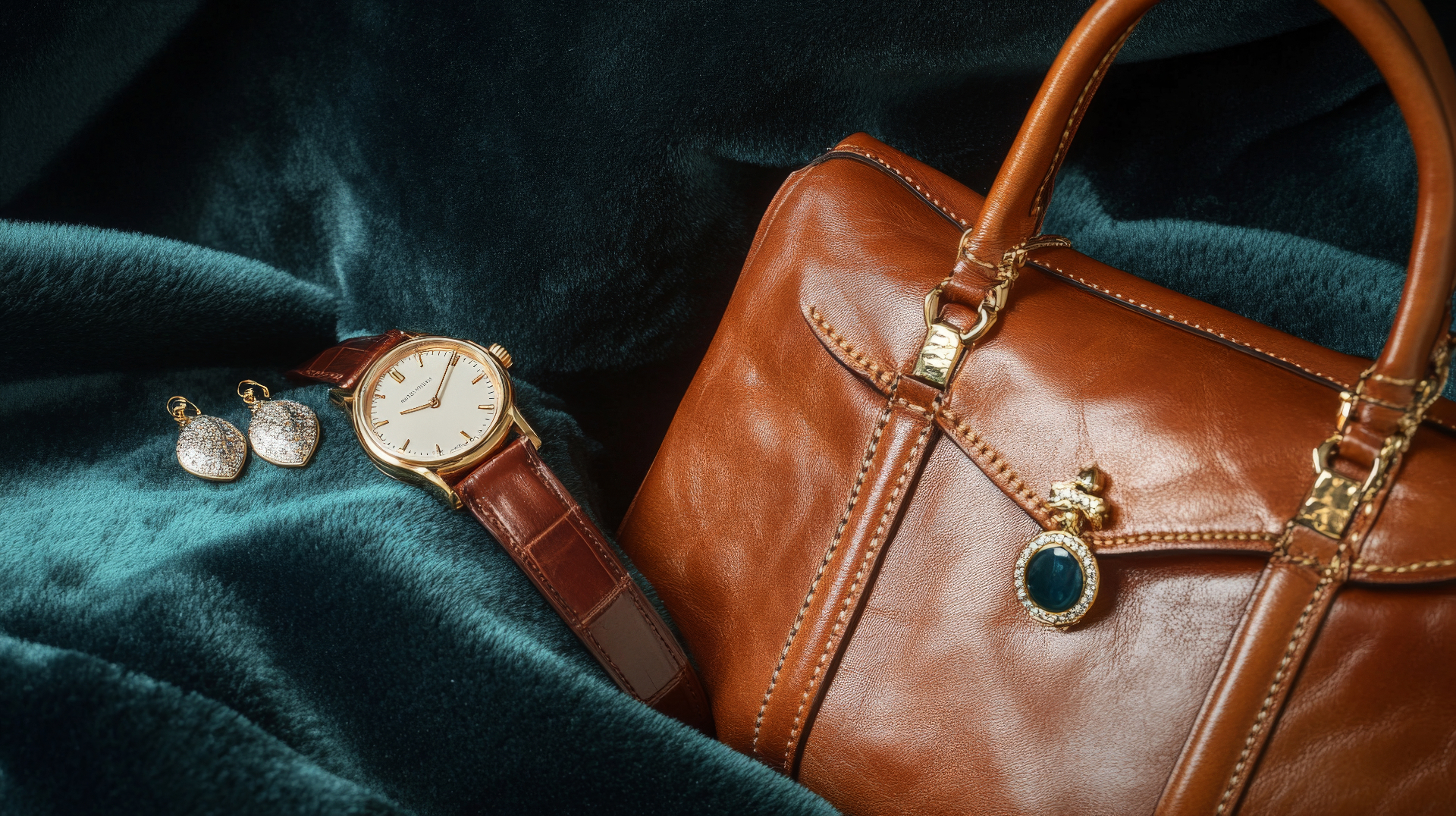
If you want to track the value of your collection, the first surprise is realizing you have one at all. A watch bought for a big birthday. Two or three bags rotated through the seasons. A ring handed down, plus one or two you bought yourself on a good month. Individually they're just things you use. Added together they're a small, real, constantly moving pool of value — a portfolio you've never actually added up. This guide shows you how to see that total, understand what moves it, and watch it change over time.
The strange part is how little we know about it. Most people can tell you what their car is worth, but ask what their watches, bags, and jewelry are worth today and the answer is a shrug. They know what they paid. They have no idea what those things would sell for now — which is the number that actually matters.
Why a collection value tracker beats a shrug
A collection value tracker exists to replace that shrug with a number. Knowing the figure gives you options: better decisions about buying and selling, real figures for insurance, and simple peace of mind. You don't need a safe full of rare pieces for this to matter — if you've bought a few nice things over the years, you already own a collection, whether or not you call it that.
That value moves for reasons that have nothing to do with whether you consider yourself a collector. When a brand raises its prices, the resale value of what you already own often drifts up with it. When a style falls out of favor, it drifts down. When something gets discontinued, the pieces already out in the world can become more sought-after. You're exposed to all of this whether you track it or not. The only question is whether you know about it — and it's worth knowing whether your things total $2,000 or $200,000.
Think of your things like a portfolio
Here's the mental shift that makes this click. Instead of a drawer of separate objects, picture a single total.
Say five pieces cost you $8,000 all in. That's the number stuck in your head, because it's what you spent. But it's the wrong number now. Today those same five pieces might be worth $9,100 on the resale market — up about 14% — or $7,200, down about 10%. Either way, "$8,000 I spent" tells you nothing useful anymore. This is exactly how people look at investments: not what they contributed, but what it's worth now and how it's trending. Your things deserve the same lens, with one pleasant difference — you can't wear an index fund.
When you treat your things as a portfolio, three numbers become useful:
-
The total value — everything in one place, so you know how much your collection is worth instead of guessing.
-
The change over time — up or down, and by how much, over six or twelve months. A trend, not a snapshot.
-
The breakdown — how much value sits in watches versus bags versus jewelry.
This isn't just a "luxury" thing
It's easy to assume this only applies at the top of the market. It doesn't — and believing that makes people ignore real value sitting in their closets. Value moves across every price level. A popular mid-range watch can hold value better than a far more expensive one everybody can walk in and buy. A well-chosen accessible bag in a sought-after style can outperform a pricier piece that's gone out of fashion. The point was never how expensive your things are; it's that they're worth something, and that something changes.
What actually drives the value of your things
A handful of forces do most of the work. Demand: how many people want a thing relative to how many exist. Condition: the same model in excellent shape can be worth dramatically more than a worn one. Completeness: original box, papers, and dust bag can add real money, and missing them quietly costs you. Retail price changes: when a brand raises prices on new pieces, pre-owned versions often drift up too. The retail-versus-resale gap: what a shop charges new is rarely what yours is worth today. You don't need to master these — you just need a way to keep an eye on them.
How to track the value of your collection in three steps
Here's where good intentions usually die: the tracking itself. People start a spreadsheet, fill in three rows, realize they'd have to re-check every market price by hand every month, and abandon it. It doesn't have to be that heavy. To track what your watches and bags are worth, it comes down to three easy steps.
First, follow the brands you care about — the labels you own plus any you're interested in, at any price level. From then on you get a heads-up on the things that move value: price increases, sales and discounts, and new releases or limited drops.
Second, add your things. For each piece you take your own photo and enter what you paid. That's it — a picture and a price. You photograph your own items; nothing is pulled from other websites, and you're not asked to upload receipts, certificates, or paperwork. It's a value tracker, not a document vault.
Third, see your total. A dashboard shows the combined value of everything, the split across categories, and how that total has moved over time. The guesswork disappears and a real number takes its place.
What a value dashboard actually shows you
At a glance you see the total worth of everything you've added, how it splits across watches, bags, and jewelry, and the direction of travel — whether your total has grown or dipped over recent months. That trend line is the quietly powerful part: a single valuation is a snapshot, but a trend tells a story. "This has been climbing steadily for six months" is the kind of insight that helps you decide whether to hold, whether a piece is a good moment to sell, and whether your next purchase makes sense given what you already own.
Getting started
You don't need to do it all at once. Add a piece or two to begin with — the watch you wear most, a bag or two — photograph each, enter what you paid, and follow the brands attached to them. Within minutes you'll have a real, current picture of what your things are worth, and a way to watch it change. Even that first small step moves you from guessing to knowing.
Key takeaways
-
Almost everyone owns more value than they track — you don't have to be a "collector."
-
Treat your things like a portfolio: total value, change over time, and a breakdown by category.
-
It applies at every price level — mass, mid, and luxury pieces all have value that moves.
-
Value is driven by demand, condition, completeness, retail price changes, and the retail-versus-resale gap.
-
Tracking is three steps: follow the brands you care about, add your things (your own photo plus the price), and watch your total.
-
You add your own photos — nothing is pulled from other sites, and there's no need to upload documents.
Frequently asked questions
Do I need expensive things for this to be worth it?
No. If you own a few pieces with resale value at any price level, knowing the combined total is useful.
Do I have to upload receipts or certificates?
No. You add your own photo of each item and the price you paid. The tool intentionally isn't a place to store paperwork.
How is the value estimated?
From a combination of market data and the details you enter. It's an informed estimate, not a guaranteed sale price.
Which categories are covered?
Watches, jewelry, and bags to start, across mass, mid, and luxury segments.
How often should I update it?
Adding your pieces is a one-time effort. After that, following the relevant brands keeps you informed, and you can revisit your dashboard whenever you want a current read.
The values, estimates, and forecasts shown are for general information only and are not investment, financial, or appraisal advice. Actual prices may differ.